
A modest proposal
Tired of partisan gerrymandering and a dysfunctional House of Representatives? Me too. I got an idea.

This week, the United States Supreme Court issued a 6 - 3 decision in a Louisiana voting rights case that makes it more difficult to argue for the drawing of congressional districts based on illegal racial gerrymandering.
The case, Louisiana v. Callais, placed new limits on Section 2 of the Voting Rights Act, which has been used for decades to challenge how voting districts are drawn in order to ensure the adequate representation of black voters. In this decision, the Supreme Court explicitly banned the use of race to determine how congressional districts are drawn.
Justice Alito wrote for the majority, “Allowing race to play any part in government decision making represents a departure from the constitutional rule that applies in almost every other context.”
I know bupkis about constitutional law, but I approve of the court’s attitude, as expressed here and in many recent decisions, that the best way to end discrimination is to stop discriminating. This, at least to me, seems to move the court away from activism in the form of legislating via legal fiat and back toward just calling balls and strikes. I don’t see this ruling as a stretch—I see it as a correction.
Predictably, not everyone views it that way. Cliff Albright of Black Voters Matter opined, “It means that you have entire communities that can go without having representation. It is literally throwing us back to the Jim Crow era unapologetically, and that’s not exaggeration.”
This, of course, is an exaggeration.
Before I present my modest proposal, a word about the hue and cry and hysteria from the left concerning this decision. I’m a white hillbilly from Appalachia, but if I were black and living in this country in 2026, I’d be way more pissed off at those on the left than those on the right about my plight.
It’s only among leftists that you can’t walk a block without tripping over someone who insists that Black Americans cannot succeed in K-12, get into college, find a job, get a driver’s license, purchase a home, start a business or vote without some form of federal assistance. All of this despite the fact that black students are admitted to places like Harvard at rates close to four times greater than their SAT scores would indicate based on race.
That’s doting assistance from cradle to grave. If an entire group of people thought so little of my abilities, I’d be pissed. I wonder if that’s why so many more blacks than expected supported Donald Trump in the last election?
But let’s move on to the issue at hand. I’m not much of a fan of tortured gerrymandering myself. Both sides of the political spectrum support grotesque gerrymandering to protect individuals and turf. It’s one of the principal reasons that the House of Representitives is so dysfunctional.
It ain’t so! You say? OK, tell me this. When was the last year Congress fulfilled one of its most basic functions, a process that, on Capitol Hill, begins in the House, and passed a budget? Hint. It’s not in this century.
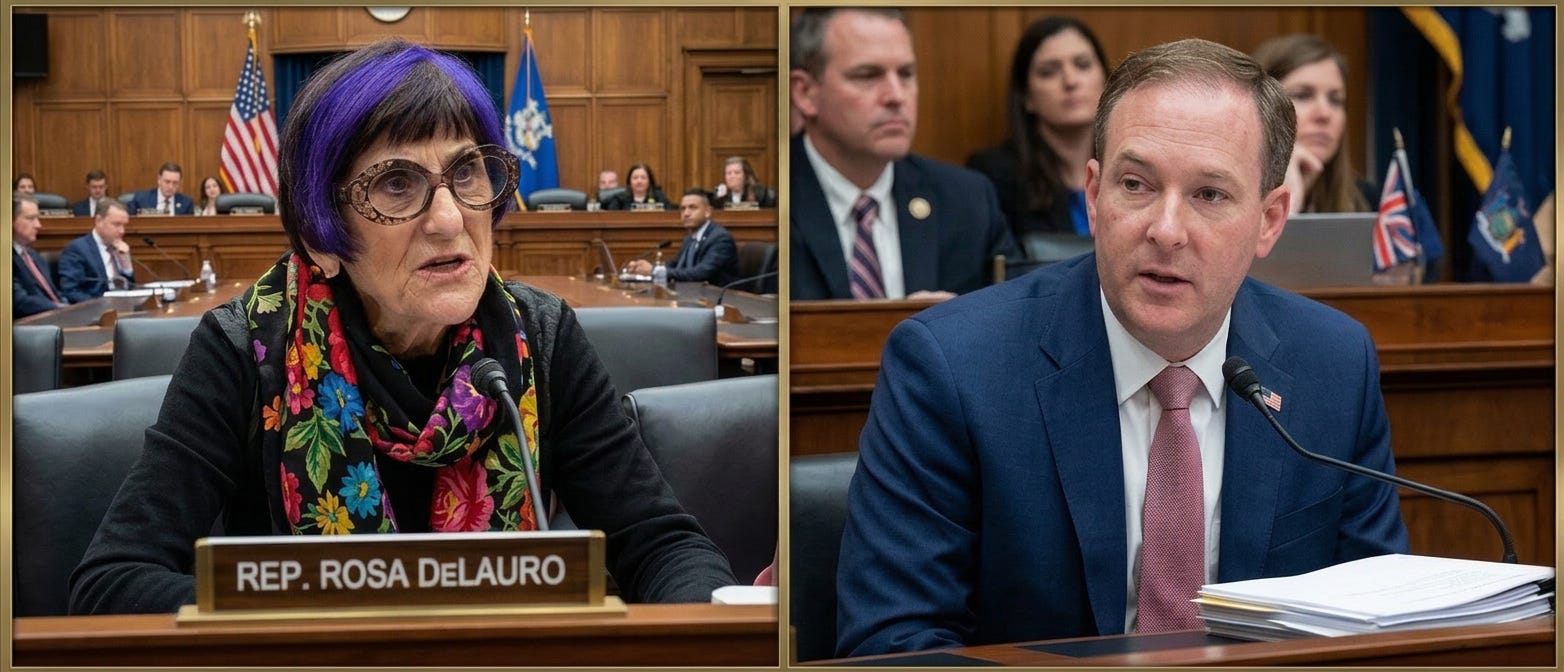
I don’t personally know anyone who thinks that the U.S. House of Representatives is anything apart from a political clown show. I submit as impartial evidence for the proposition this clip of EPA administrator Lee Zeldin using Loper Bright Enterprises v. Raimondo (a recent SCOTUS decision relevant to the discussion at hand) to rope-a-dope Rep. Rosa DeLauro (D-CT), the ranking Democrat on the House Appropriations Committee, into embarrassing everyone in the country with blue hair.
I’m quite sure that Rosa DeLauro and her fellow progressives lack the self-awareness to see this for the takedown that it was. Black friends, Rosa DeLauro is one of the people who believe that you need a lot of help from the federal government to achieve a goal as modest as being just like her. Ponder that.
The dysfunction in the House of Representatives is complicated—but in no small part influenced by a lack of competitive seats due to grotesque levels of gerrymandering. The good news is that the 21st century may offer a remedy.
AI, all the rage these days, needs some work. There are many reasons to doubt the efficacy and politically/socially impartial nature of some of the leading AI engines. But I think the day is coming when AI will improve dramatically.
I’m not a fan of AI for many of the things that people imagine that it will be useful for. That’s a discussion for another time. But one thing I think that AI could be very useful for is solving otherwise intractable legal disputes—like the decennial process of redistricting. As imperfect as even improved AI might be, it’s probably better than allowing political parties or allegedly non-partisan panels and judges to draw boundaries.
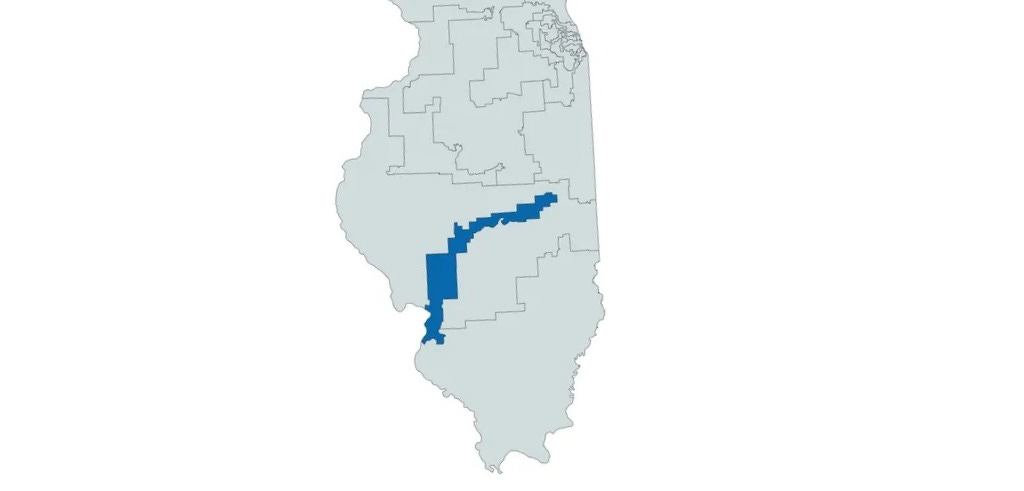
I don’t know if I can name a single human being who I’d trust to draw political boundaries impartially 100% of the time. Redistricting might just be a task tailor-made for AI. Input the geography, demographics, and guidelines, and let AI draw the boundaries. I think that I trust AI, with some safeguards, to manage the process better than the folks who come up with districts that look like this:
That’s it. My modest proposal. It involves AI and politics, two of the most trustworthy things out there. What could possibly go wrong?
Note to readers. For those of you who have challenged me to write a column of 1000 words or less, this piece is exactly 1000 words long. Also, will you please join me in celebrating my son MJ’s 10th birthday today, May 1st.
Associated Press and Idaho Press Club-winning columnist Martin Hackworth of Pocatello is a physicist, writer, climber, skier, motorcyclist, musician, and retired Idaho State University faculty member who now spends his time raising four kids. Follow him on X at @MartinHackworth, on Facebook at facebook.com/martin.hackworth, and on Substack at martinhackworthsubstack.com.
Happy birthday to the lil' feller and here's hoping he makes three digits.
“It means that you can have entire communities that go without representation.”
I get that it doesn’t matter to the Democrats that most of my state lacks representation. They did this, and it enabled them to win, so who cares if my vote didn’t count? What really disgusts me is when politicians don’t recognize the existence of the people they disenfranchised.
Pathological narcissism is so pervasive in our country now, I see little hope of turning it around.